
A note from BI Research Manager, Dr. Caiti Beth McKinney:
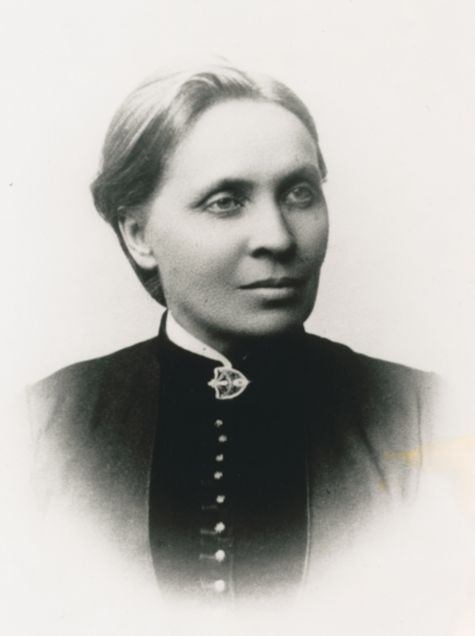
Hello, readers of Lili’s Corner! I am thrilled to share with you news of an amazing effort to promote the work of Swedish composer Elfrida Andrée. Below you will find information from the Boston University School of Music regarding a series of upcoming events, including a panel, concert, and recording project of Andrée’s Suffrage Cantata (1911) led by BU Director of Orchestral Activities, Sarah Ioannides. We are happy to share this outstanding project with all of you, and hope that any of you located in the Boston area will be free to attend!
“This fall, The Boston University School of Music and partners examine and perform works by a remarkable composer, Elfrida Andrée, who was composing and performing well ahead of her time. A panel and performance precede a world premiere recording at Boston University.
Sarah Ioannides, Director of Orchestral Activities and Associate Professor in Orchestral Conducting is spearheading the expansive efforts. The programming is made possible thanks to collaboration with Dr. Daniel Parsley (Director of Choral Activities, BU School of Music), musicologist and expert on Elfrida Andrée Dr. Jonathan Spatola-Knoll (Scholar and Music Consultant in Residence), The Women’s Philharmonic Advocacy, Swedish Women’s Educational Association, New England Foundation for Psychoanalysis, and Boston University’s Anna Howard Shaw Center.” - Breaking Barriers & Breaking Silence: Boston University School of Music Celebrates a Pioneering Composer
Learn about Elfrida Andrée
Elfrida Andrée was born to Andreas and Lovisa (Lyth) Andrée on February 19, 1841 in Visby, Sweden, located on the small island of Gotland. Her father was a physician and earned enough to pay for an education in music for Andrée, her older sister Fredrika (1836-1880), and her younger brother Tor (1848-1901). A progressive thinker, Andreas Andrée was interested in things such as electric lighting and physical fitness. This liberal outlook proved to greatly benefit his two daughters in particular who otherwise would not have had equal opportunity for a well-rounded education. Andreas, an amateur musician himself, taught his children at home or involved local music teachers, thus Andrée learned voice, harp, and organ. Even at the young age of seven, Andrée had a passion for composition and began to compose small works. By the time she was fourteen, she had composed at least nineteen pieces for piano, voice, and choir.
In 1855, at the age of fourteen, Andreas sent Andrée to study music at the finest music institution in Sweden, the Royal Academy of Music (Kungliga Musikaliska Akademien) in Stockholm. While at the Academy, she studied voice, harp, and organ performance. Partway through her schooling, Andrée had to choose between pursuing voice and following in the footsteps of her sister Fredrika, an opera singer, or pursue the study of the organ. She ultimately chose to specialize in organ performance, but since she was a woman, the Academy regarded her as an external student in this discipline because, at the time, only male students were eligible to receive this degree. Despite this restriction, Andrée was allowed to study with the conservatory’s organ professor, Gustaf Mankell (1812-1880), whilst she attended the university. In 1857, at the young age of sixteen, Andrée passed the Royal Academy’s organists’ examination as both the youngest student and the first woman to do so, a triumph for the young musician.
Elfrida Achieves Ambitious Firsts for Women
Although Andrée quickly sought work as an organist at the Church of St. Jacques in Stockholm, she was refused appointment in 1859 on advice of the King’s archbishop who touted their interpretation of the biblical scripture, 1 Corinthians 14:34 “Women should remain silent in the churches” (1 Cor 14:34 NIV). There was also a belief in the church that a woman organist was “distracting, indecent, and disturbing to the atmosphere of meditation” (Ford 1997, 60). This setback did not deter Andrée and her father. For the next four years, they endlessly appealed the government’s restrictions on women in church. In 1861, they received a partial victory. Parliament passed an amendment declaring that an unmarried woman over the age of twenty-five could now legally be a professional organist. Andrée, though only twenty at the time, somehow managed to receive brief appointments at the Finnish and French Reform churches in Stockholm in addition to opportunities at the Royal Teaching Academy and the Allins School for Girls.
Selections from “Elfrida Andrée: A Pioneering Composer” by Elizabeth Tackett
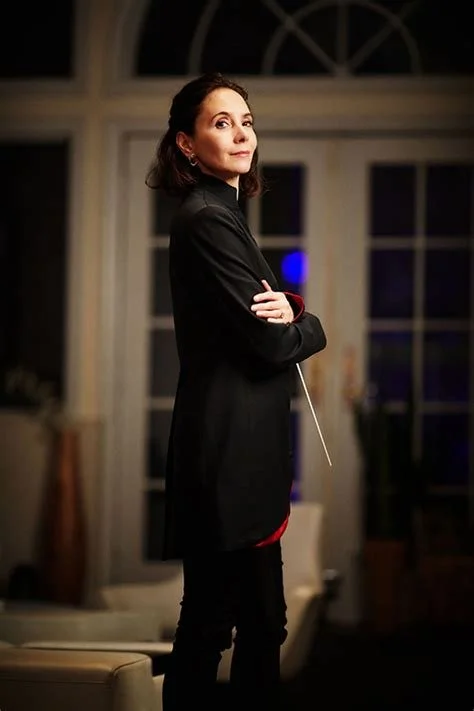
“Andrée’s story is as fascinating as her music: an artist who refused to accept the limitations placed on her and used her creativity to challenge the world around her. Creating the first professional recordings of these works does more than preserve overlooked music—it gives her voice a lasting place in the international musical landscape and invites us to reconsider the history of classical music through a wider lens.”
Sarah Ioannides
Director of Orchestral Activities; Associate Professor in Orchestral Conducting
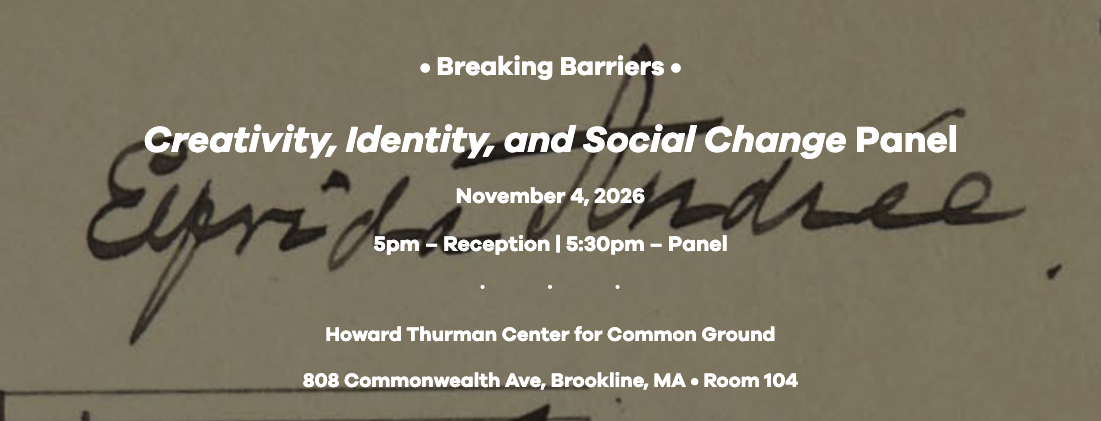
An interdisciplinary discussion of Elfrida Andrée as a case study in artistic resilience and innovation with Sarah Ioannides, Dr. Jonathan Spatola-Knoll, Dr. Stephanie Brody (Supervising and Training Analyst, Boston Psychoanalytic Society and Institute, and Lecturer in Psychology in the Department of Psychiatry, Harvard Medical School), Dr. Liane Curtis (President and Co-Founder, Women’s Philharmonic Advocacy; President, Rebecca Clarke Society), Dr. Choi, Hee An (Clinical Associate Professor of Practical Theology and Director, Anna Howard Shaw Center, Boston University). Moderated by Leland Clarke, Professor of the Practice, Musicology & Ethnomusicology.
The panel creates a space for BU School of Music students and the broader Boston University community to engage with some big questions. Whose voices do we hear? Whose voices have been overlooked? How can artists and institutions shape a richer musical culture for the future worldwide?
A 5pm welcome reception with refreshments precedes the 5:30 panel. Free and open to all.
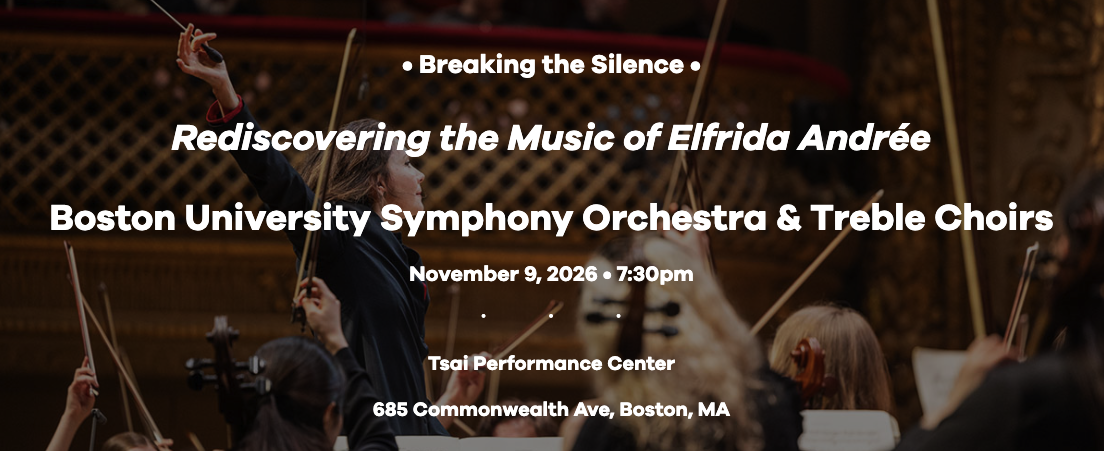
Boston University Symphony Orchestra & Treble Choirs present a concert of Andrée’s works, led by conductor Sarah Ioannides and joined by Swedish-American soprano Kristine Nowlain. This performance celebrates a remarkable composer whose music and advocacy helped shape cultural history. The program includes multiple U.S., East Coast, and world premieres and culminates in Andrée’s Suffrage Cantata (1911). This concert is free and open to all.
Program
ANDRÉE • Overture in G Minor
ANDRÉE • Minuet (U.S. Premiere)
ANDRÉE • Svanen
ANDRÉE • I Templet (World Premiere)
ANDRÉE • Till Näktergalen (U.S. Premiere)
ANDRÉE • Varför och därför
ANDRÉE • Suffrage Cantata (East Coast Premiere)
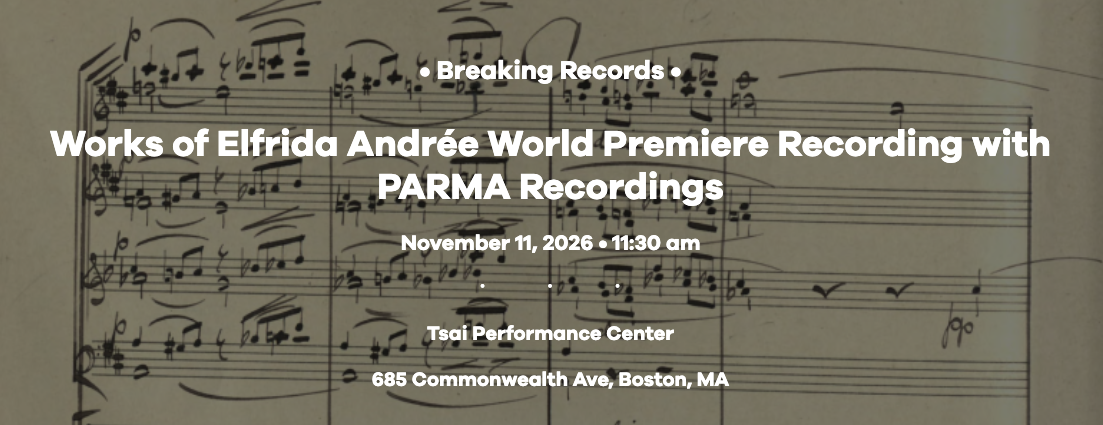
Image Credit: Musik- och Teaterbiblioteket, Stockholm
Boston University is embarking on the historic performance and world premiere recording of all works, with GRAMMY-winning label PARMA Recordings. Many of the works will be world premieres of new editions, none of them having been professionally recorded before. The recording session is not open to the public.
According to Sarah Ioannides, Director of Orchestral Activities; Associate Professor in Orchestral Conducting, “Andrée’s story is as fascinating as her music: an artist who refused to accept the limitations placed on her and used her creativity to challenge the world around her. Creating the first professional recordings of these works does more than preserve overlooked music—it gives her voice a lasting place in the international musical landscape and invites us to reconsider the history of classical music through a wider lens.”
She continues, “our Boston University orchestra and choir students are at the center of that process, not simply studying this history but discovering this music, bringing it to life at the highest level, becoming the reference recording for these works and helping shape what the world will hear next. We know how profoundly music can change the way we see the world, and this project asks us to consider whose voices we have yet to hear.”
If you would like to learn more about Elfrida Andrée, check out the April 2026 edition of Lili’s Corner, written by Elizabeth Tackett.
